


In Stock
69.01€ / box
Ex Tax: 55.65€ / box
95.84€ / m³



In Stock
21.07€ / box
Ex Tax: 16.99€ / box
0.84€ / pc.
In Stock
49.00€ / box
Ex Tax: 39.52€ / box
90.74€ / m³
In Stock
55.00€ / box
Ex Tax: 44.35€ / box
91.67€ / m³
In Stock
72.68€ / box
Ex Tax: 58.61€ / box
121.13€ / m³

In Stock
53.00€ / box
Ex Tax: 42.74€ / box
73.61€ / m³


In Stock
53.00€ / box
Ex Tax: 42.74€ / box
1.84€ / m²
In Stock
69.01€ / box
Ex Tax: 55.65€ / box
95.84€ / m³




In Stock
78.19€ / box
Ex Tax: 63.06€ / box
2.72€ / m²



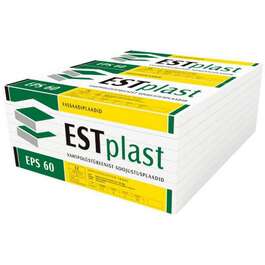

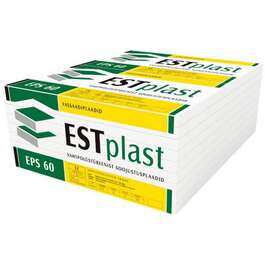

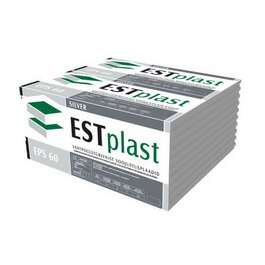
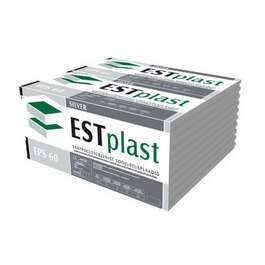
In Stock
73.59€ / box
Ex Tax: 59.35€ / box
15.33€ / m²
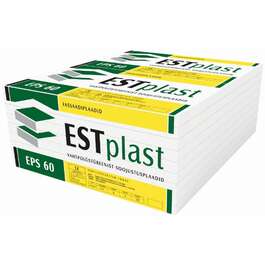
Pre-Order
Package size (m²)
6
Hardness (EPS)
60
Type
Styrofoam
Length (mm)
1000
Width (mm)
600
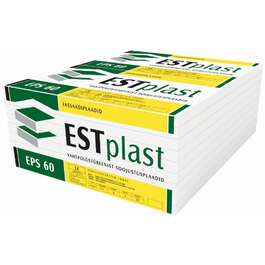
Pre-Order
Package size (m²)
3.6
Hardness (EPS)
60
Type
Styrofoam
Length (mm)
1000
Width (mm)
600




Frequently asked questions about the General purpose polystyrene products category
What are General purpose polystyrene products?
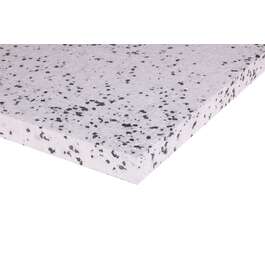
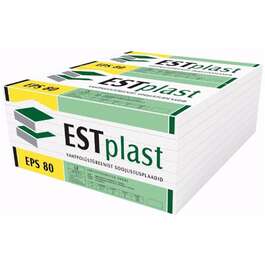
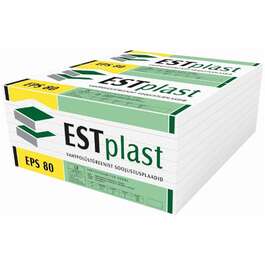
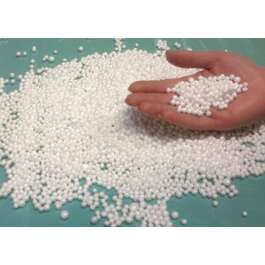
General purpose polystyrene products are expanded polystyrene (EPS) boards and sheets available in densities EPS50, EPS80 and EPS100, with thicknesses from 25 to 150 mm and standard sizes 1000x1200 mm or 1000x600 mm. They are used for thermal insulation, packaging and underlay because they are lightweight and have low thermal conductivity.
How to choose between EPS50, EPS80 and EPS100 for wall insulation?
Choose by required insulation performance and compressive strength: EPS50 is for non‑loaded structures and underlays, EPS80 is a general-purpose option for walls and floors, and EPS100 is for areas needing higher load-bearing capacity. Also consider required thickness (25–150 mm) and installation method.
What are the standard sheet sizes and volumes in this category?
Standard sheet sizes are 1000x1200 mm and 1000x600 mm. Thicknesses available include 25, 50, 100 and 150 mm; some products are listed with a package volume of 0.72 m³.
Is MINI EPS50 50x1000x600 suitable as an underlay for flooring?
Yes, MINI EPS50 50x1000x600 is suitable as a lightweight flooring underlay providing thermal and acoustic insulation, but for high load applications you should prefer EPS80 or EPS100.
How do MINI EPS sheets differ from standard EPS sheets?
MINI EPS sheets are smaller and often thinner (e.g. 50x1000x600 mm) for easier fitting and small-scale work, while standard EPS sheets are 1000x1200 mm and better for covering large surfaces. MINI is handy for internal fittings and narrow areas.
Which EPS density is best for insulating floors and terraces?
EPS80 or EPS100 are typically recommended for floors and terraces because they provide higher load‑bearing capacity. Consider 100–150 mm thickness where increased thermal insulation and strength are required.
Can EPS boards be cut and trimmed with regular tools?
Yes, EPS boards can be cut with a utility knife, jigsaw or fine-toothed saw; wear a dust mask and clear debris during cutting. For long straight cuts use a guide and a sharp blade for best results.
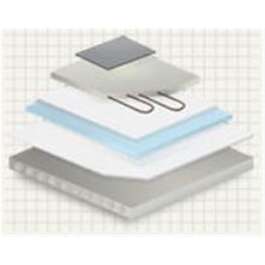
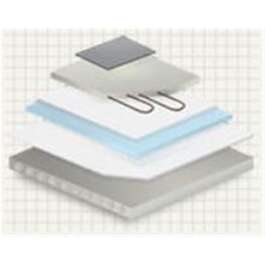
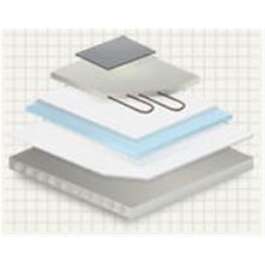
Are these boards suitable for use with underfloor heating systems?
Yes, these EPS boards can be used as an underlay for underfloor heating, preferably EPS80 or EPS100 for better load distribution. Ensure chosen thickness and density comply with your underfloor heating system’s specifications.
What is the thermal insulation difference between EPS50 and EPS80?
EPS80 has higher density and better thermal insulation compared with EPS50, resulting in greater compressive strength and insulating performance at the same thickness. For the same thermal resistance, EPS80 often allows a thinner board than EPS50.
Can polystyrene from this category be used for packing fragile items?
Yes, expanded polystyrene (EPS50 and EPS80) is commonly used to protect fragile items because it is lightweight and shock-absorbing. For very fragile or heavy items consider higher density EPS or combine with additional protective materials.
What are the minimum and maximum thicknesses in the range?
The range includes thicknesses from 25 mm up to 150 mm (e.g. 25x1000x1200 mm to 150x1000x1200 mm). This covers needs from thin thermal insulation to more robust load‑bearing underlays.
Which product types in the category are popular for external wall insulation?
For external wall insulation, EPS80 and EPS100 boards in 1000x1200 mm format with thicknesses of 50–150 mm are commonly chosen because they offer required insulation and strength. The catalogue includes EPS80 and EPS100 items suitable for external systems.
New Arrivals in the General purpose polystyrene products Category in 2026
Best sellers in the General purpose polystyrene products category in 2026
Cheap products in the General purpose polystyrene products category
Expensive products in the General purpose polystyrene products category
Price of products in the General purpose polystyrene products Category
General purpose polystyrene products: 1.71€ — 63.06€ (22)