


Frequently asked questions about the Ceiling skirting category
What is Ceiling skirting?
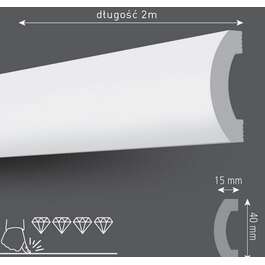
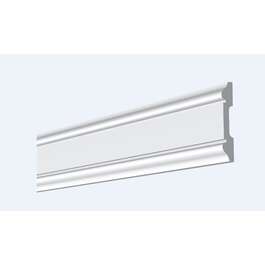
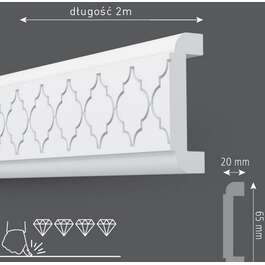
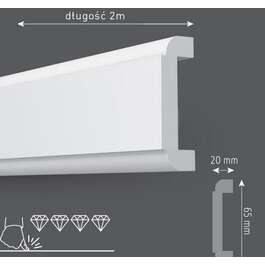
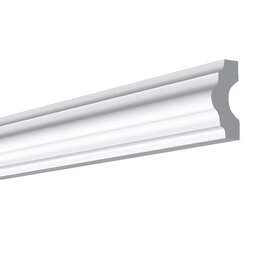
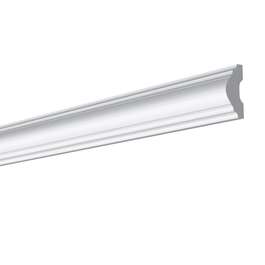
Ceiling skirting is a decorative moulding (often foam, polyurethane or PVC) used to finish the junction between wall and ceiling or around stretch ceilings. Common sizes in this category include 0.2x2M, 0.4x2M, 0.5x2M, 0.65x0.15x2M and 0.65x0.2x2M.
Are ceiling skirtings suitable for stretch ceilings?
Yes — foam and PVC skirtings are suitable for stretch ceilings as they conceal gaps and fixings. Choose flexible profiles with heights around 0.15–0.2 m, such as SR1 or SF1 models.
What sizes of ceiling skirting are available in this category?
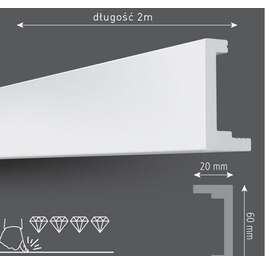
This category offers 2 m-long skirtings in various widths/heights: 0.2x2M, 0.4x2M, 0.5x2M, 0.65x0.15x2M and 0.65x0.2x2M. Corner profiles like NURGALIIST SC1 0.2X0.6X2M are also available.
How to glue ceiling skirting to wall and stretch ceiling?
Use an adhesive suitable for foam or PVC (construction or acrylic adhesive) applied in beads or dots. Clean and degrease surfaces, press the skirting for 10–30 seconds and secure with painter’s tape if needed until the adhesive sets.
Which models are suitable for corners and joints?
Use corner-specific profiles such as NURGALIIST SC1 0.2X0.6X2M or mitre standard mouldings at 45°. For internal corners choose slightly flexible profiles to achieve tight joints.
Can ceiling skirtings be painted and with what?
Yes — foam and polyurethane skirtings can be painted after priming with water-based or acrylic paints. Apply 1–2 coats and test paint on a small area first.
What is the difference between SF1, SF5, SD, SG, SR1 and SB models?
These codes denote shape and size: SF1 and SR1 are narrow 0.65x0.15x2M profiles, SF5 is taller 0.65x0.2x2M, SD is 0.4x2M, SG 0.5x2M and SB a slim 0.2x2M frieze. Choose by desired height and decorative style.
What materials are the ceiling skirtings in this category made of?
The selection includes lightweight foam, PVC and polyurethane mouldings intended for decorative finishing. These materials are light, easy to cut and paint.
How to calculate how many skirtings you need for a room?
Measure the room perimeter (sum of wall lengths) and divide by the length of one profile (2 m). Add 5–10% extra for cuts and waste, especially in rooms with many corners.
Are these skirtings suitable for wet rooms like kitchen or bathroom?
Foam skirtings are generally not ideal for constant moisture; for kitchens and bathrooms choose PVC or polyurethane profiles. Use sealant at joints for extra protection.