



Frequently asked questions about the Load bearing polystyrene products category
What are Load bearing polystyrene products and where are they used?
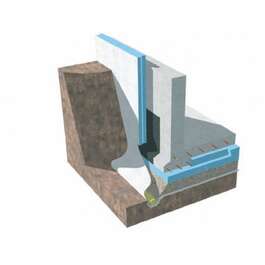
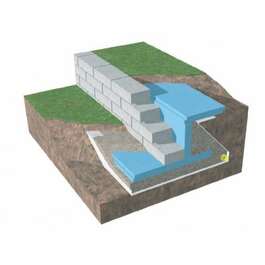
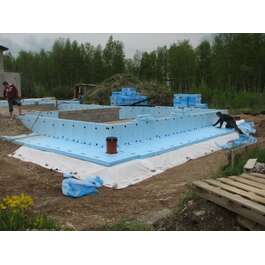
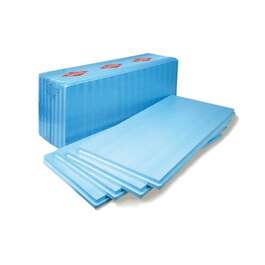
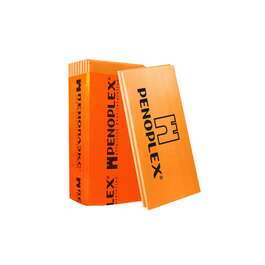
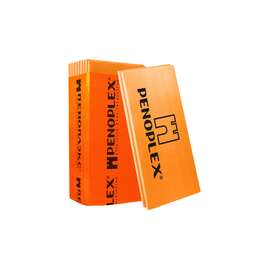
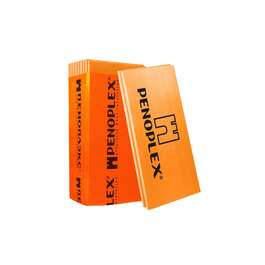
Load bearing polystyrene products are rigid EPS/XPS boards and rolls (PENOPLEX, STYROFOAM, POLYSTYRENE EXPANDED) designed for high-load applications like foundations, driveways and terraces. Common sizes in the range include 50×585×1185 mm and 100×585×1185 mm, plus EPS rolls 50–150 mm thick for structural insulation.
What is the difference between PENOPLEX GEO-FUND 300kPA and PENOPLEX BASE 150kPA?
PENOPLEX GEO-FUND 300kPA is rated to 300 kPa for heavy ground and foundation loads, offered in 50×585×1185 and 100×585×1185 mm. PENOPLEX BASE 150kPA is 150 kPa, suited for lighter base applications and floor insulation, available in 20×585×1185 and 30×585×1185 mm.
Are EPS120 PERIM.PLUS boards suitable for external wall and façade insulation?
EPS120 PERIM.PLUS (50/100/150 mm) is suitable for façades and plinth insulation because EPS120 density provides adequate load-bearing and thermal performance. Choose the thickness to meet required thermal resistance and structural load conditions.
Can STYROFOAM 250SL-A 50×1185×585 be used under road surfaces?
STYROFOAM 250SL-A (50×1185×585 mm) is designed for higher loads and can be used beneath road and driveway surfaces when the subbase and drainage are correctly engineered. Ensure the selected thickness and load class match the calculated traffic loads.
What sizes do VAHTPOLÜSTÜROOL EPS120 PERIM.PLUS rolls come in and where are they used?
VAHTPOLÜSTÜROOL EPS120 PERIM.PLUS rolls are available in 50, 100 and 150 mm thicknesses; rolls are used for insulating complex shapes, rounded structures and foundations where close fitting is needed. The roll format simplifies installation on curved surfaces.
Which thickness should I choose for insulating a terrace: 50, 100 or 150 mm?
Thickness depends on load and thermal needs: 50 mm suits light decking with low loads; 100 mm is a common choice for medium loads; 150 mm is advised for high loads or when higher thermal insulation is required. Select EPS120/200 or PENOPLEX GEO-FUND based on the design load capacity.
How do I cut and fix 585×1185 mm boards on site?
585×1185 mm boards can be cut with a handsaw, long-bladed knife or fine-toothed circular saw; fixings use insulation anchors or adhesive mortars compatible with EPS/XPS. Ensure a level subbase and observe edge gaps per installation guidelines.
Are these materials suitable for insulating a garage floor with vehicle traffic?
For garage floors use higher load-bearing boards such as PENOPLEX GEO-FUND 300kPA or STYROFOAM 250SL-A and a thickness that spreads the load. Account for drainage, subbase stiffness and wheel contact pressure in the design.
How does EPS200 PERIM.PLUS differ from EPS120 PERIM.PLUS?
EPS200 PERIM.PLUS has higher density and greater load-bearing capacity than EPS120 PERIM.PLUS, making it preferable for heavier loads and reduced deformation. EPS120 is typically adequate for standard façades and plinths; choose EPS200 for high-load areas.
Can I combine different board thicknesses (e.g. 20 mm and 30 mm PENOPLEX BASE) in one assembly?
You can combine 20 mm and 30 mm PENOPLEX BASE boards to achieve the total insulation thickness, but bear in mind the overall load-bearing requirement and ensure a level support. When mixing layers, level surfaces and fix layers per installation guidance.