

In Stock
21.94€ / sheet
Ex Tax: 17.70€ / sheet
6.10€ / m²
Length (mm)
3000
Width (mm)
1200
Thickness (mm)
15
In Stock
19.84€ / sheet
Ex Tax: 16.00€ / sheet
6.36€ / m²
Length (mm)
2600
Waterproof gyprock
Fire resistant plasterboard
Width (mm)
1200
Thickness (mm)
15
In Stock
16.69€ / sheet
Ex Tax: 13.46€ / sheet
4.64€ / m²
Length (mm)
3000
Waterproof gyprock
Fire resistant plasterboard
Width (mm)
1200
Thickness (mm)
12.5
In Stock
13.55€ / sheet
Ex Tax: 10.92€ / sheet
4.34€ / m²
Length (mm)
2600
Waterproof gyprock
Fire resistant plasterboard
Width (mm)
1200
Thickness (mm)
12.5
Pre-Order
Length (mm)
2000
Waterproof gyprock
Fire resistant plasterboard
Width (mm)
1250
Thickness (mm)
20
Frequently asked questions about the Fire resistant plasterboard category
What is GKF fire-resistant gypsum board and how does it differ from standard drywall?
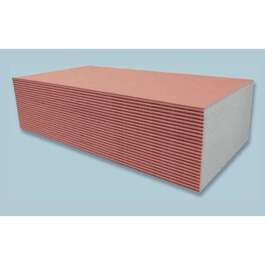
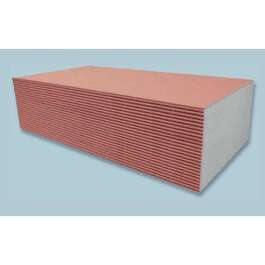
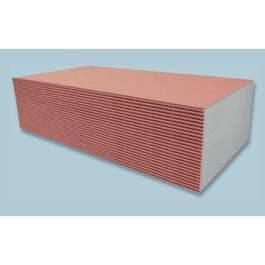
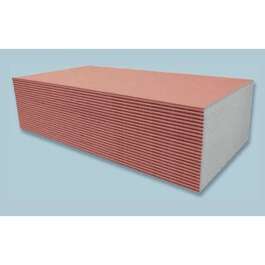
GKF (Gipskarton-Feuerschutzplatte) is a fire-resistant drywall reinforced with glass fibres and containing additives that slow the spread of fire. Unlike standard GKB drywall, it maintains structural integrity when exposed to high temperatures significantly longer — from 30 to 120 minutes depending on the system assembly. It is visually identified by its pink or red paper facing.
Where is GKF used?
GKF is used wherever regulations require fire-rated assemblies: in fire-rated partitions and floor/ceiling assemblies, around fireplaces, stoves and flue pipes, in boiler rooms and technical spaces, when cladding load-bearing steel structures, in stairwells and evacuation corridors, as well as in apartment buildings and commercial properties.
What fire resistance rating does GKF provide?
The fire resistance rating depends on the entire system assembly, not just the board. One layer of GKF 12.5 mm on a metal frame with mineral wool achieves EI 30 (30 minutes). A double layer or 15 mm thickness provides EI 60 or higher. For EI 90-120, multi-layer systems with cavity fill are used. Exact data for Knauf systems are listed in their technical datasheets.
How do you identify GKF among other drywall types?
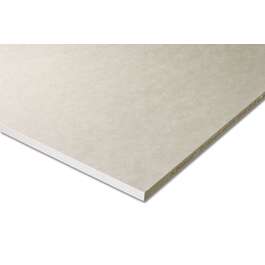
GKF is easy to identify visually: the paper facing is pink or red. Standard GKB is grey, moisture-resistant GKBI is green, and the combined GKFI (moisture and fire resistant) is green with a red stripe. The board surface carries manufacturer markings indicating the type per EN 520 — for example Knauf Fireboard, Rigips RFI or Gyproc FireLine.
Can GKF be used everywhere instead of standard drywall?
Technically yes — GKF is stronger and safer than standard drywall. However, it costs more and its use in areas without fire-resistance requirements is not economically justified. GKF should be used where required by regulations or where there is a genuine fire risk: near a fireplace, in a boiler room, along escape routes.
What thickness of GKF is needed for assemblies near a fireplace or stove?
For cladding walls and partitions near fireplaces and stoves, GKF 12.5 mm or 15 mm is typically used. It is important to observe the minimum clearances specified in the appliance documentation and, where needed, to supplement the assembly with basalt wool or heat-resistant panels for additional thermal protection.
Is GKF installed the same way as standard drywall?
Generally yes. The same metal frame and screws are used. However, for fire-rated assemblies the profile spacing must not exceed 400 mm. Joints should be reinforced with Knauf paper tape. It is important not to damage the paper facing during installation, as it plays a role in the fire resistance of the assembly.
Is special filler needed for GKF joints?
Standard gypsum filler used with Knauf paper tape is suitable for jointing GKF. In areas of direct high-temperature exposure — for example in fireplace insert recesses — heat-resistant grouts or silicone sealants rated for temperatures from 250°C and above are used instead of standard filler.
How does GKF behave in a fire?
When exposed to fire, gypsum releases chemically bound water (dehydration), absorbing thermal energy and slowing the heating of the structure. The glass fibres in GKF maintain the board shape at high temperatures, preventing it from crumbling. This provides critically important time for the evacuation of people and fire suppression.
What regulations govern the use of GKF in Estonia?
In Estonia, the use of fire-resistant assemblies is governed by building codes based on the Eurocodes: EN 13501 (fire classification) and EN 520 (requirements for gypsum boards). For public buildings, escape routes and apartment buildings, fire-rated partitions are generally mandatory. Consult a designer or fire inspector for specific requirements.
Can GKF be combined with standard drywall in one assembly?
Yes, this is common practice. For example, the inner (first) layer is made from GKF and the finishing layer from standard GKB or moisture-resistant GKBI. This allows costs to be reduced while maintaining fire resistance. It is important that the completed assembly corresponds to a certified system with a confirmed fire rating.
Does GKF affect room sound insulation?
Yes — due to its higher density and glass fibre content, GKF provides slightly better sound insulation compared to standard GKB of the same thickness. Combined with mineral wool in the frame cavity, such an assembly simultaneously meets both fire resistance and acoustic requirements, making it a popular choice for party walls between apartments.
How should GKF be stored on a construction site?
Storage conditions are the same as for standard drywall: horizontally on a flat base or vertically with full-length support, in a location protected from moisture and direct precipitation. Getting wet significantly reduces strength and may impair fire-resistant properties. Sheets should not be stored outdoors without shelter for more than one or two days.
Which GKF brands are available on the market?
The leading brands on the European market are Knauf (Knauf Fireboard, GKF 12.5 and 15 mm), Rigips (RFI) and Gyproc (FireLine). All comply with EN 520 type F and hold certifications for fire-rated systems. To check availability of specific brands at Sitypro.com, call +372 536 16980 or visit sitypro.com.
How do you order GKF from Sitypro.com?
GKF and all related materials — profiles, mineral wool, screws, Knauf tape — are available in the "Building Materials — Building Boards / Drywall" section at sitypro.com. Delivery throughout Estonia. For stock enquiries and orders: +372 536 16980.