
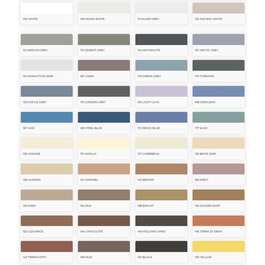
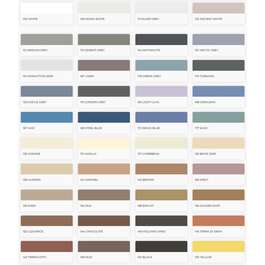
Joint mixtures

GROUT FILLER  ULTRACOLOR PLUS NR.120 5kg
In Stock
21.48€ / pc. Ex Tax: 17.32€ / pc.
GROUT FILLER  ULTRACOLOR PLUS NR.113 5kg
In Stock
21.48€ / pc. Ex Tax: 17.32€ / pc.
GROUT FILLER  ULTRACOLOR PLUS NR.100 5kg
In Stock
21.48€ / pc. Ex Tax: 17.32€ / pc.
GROUT FILLER  ULTRACOLOR PLUS NR.114 5kg
In Stock
21.48€ / pc. Ex Tax: 17.32€ / pc.
GROUT FILLER  ULTRACOLOR PLUS NR.103 5kg
In Stock
21.48€ / pc. Ex Tax: 17.32€ / pc.
GROUT FILLER  ULTRACOLOR PLUS NR.111 5kg
In Stock
21.48€ / pc. Ex Tax: 17.32€ / pc.
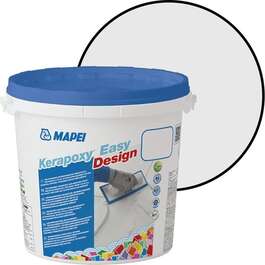
GROUT FILLER  MAPEI KERAPOXY EASY DESIGN NR.100 3kg
In Stock
59.94€ / pc. Ex Tax: 48.34€ / pc.
GROUT FILLER  ULTRACOLOR PLUS NR.110 5kg
In Stock
21.48€ / pc. Ex Tax: 17.32€ / pc.
GROUT FILLER  ULTRACOLOR PLUS NR.112 5kg
In Stock
21.48€ / pc. Ex Tax: 17.32€ / pc.
GROUT FILLER  ULTRACOLOR PLUS NR.123 5kg
In Stock
21.48€ / pc. Ex Tax: 17.32€ / pc.
GROUT FILLER  MAPEI KERAPOXY EASY DESIGN NR.110 3kg
In Stock
59.94€ / pc. Ex Tax: 48.34€ / pc.
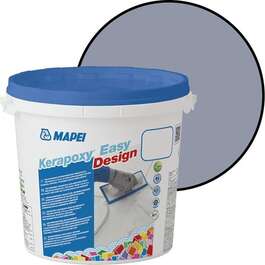
GROUT FILLER  MAPEI KERAPOXY EASY DESIGN NR.114 3kg
In Stock
59.94€ / pc. Ex Tax: 48.34€ / pc.
GROUT FILLER  MAPEI KERAPOXY EASY DESIGN NR.123 3kg
In Stock
59.94€ / pc. Ex Tax: 48.34€ / pc.
GROUT FILLER  MAPEI KERAPOXY EASY DESIGN NR.111 3kg
In Stock
59.94€ / pc. Ex Tax: 48.34€ / pc.
GROUT FILLER  MAPEI KERAPOXY EASY DESIGN NR.113 3kg
In Stock
59.94€ / pc. Ex Tax: 48.34€ / pc.
GROUT FILLER  MAPEI KERAPOXY EASY DESIGN NR.112 3kg
In Stock
59.94€ / pc. Ex Tax: 48.34€ / pc.
GROUT FILLER  MAPEI KERAPOXY EASY DESIGN NR.120 3kg
In Stock
59.94€ / pc. Ex Tax: 48.34€ / pc.
GROUT FILLER  MAPEI KERAPOXY EASY DESIGN NR.127 3kg
In Stock
59.94€ / pc. Ex Tax: 48.34€ / pc.
GROUT  MIRA MULTIPOX ANTRATSIIT 1kg
In Stock
13.11€ / pc. Ex Tax: 10.57€ / pc.
13.11€ / m²
GROUT  MIRA MULTIPOX BEEŽ 1kg
In Stock
13.11€ / pc. Ex Tax: 10.57€ / pc.
13.11€ / m²
Grout  CERESIT CE60 01 WHITE 2kg
In Stock
27.53€ / pc. Ex Tax: 22.20€ / pc.
GROUT  MIRA MULTIPOX VALGE 1kg
In Stock
13.11€ / pc. Ex Tax: 10.57€ / pc.
13.11€ / m²
GROUT  MIRA MULTIPOX PRUUN  1kg
In Stock
13.11€ / pc. Ex Tax: 10.57€ / pc.
13.11€ / m²
GROUT  MIRA MULTIPOX MUST 1kg
In Stock
13.11€ / pc. Ex Tax: 10.57€ / pc.
13.11€ / m²
GROUT  MIRA MULTIPOX METALLIHALL 1kg
In Stock
13.11€ / pc. Ex Tax: 10.57€ / pc.
13.11€ / m²
GROUT  MIRA MULTIPOX HELEPRUUN 1kg
In Stock
13.11€ / pc. Ex Tax: 10.57€ / pc.
13.11€ / m²
GROUT  MIRA MULTIPOX LIGHT BEIGE  1kg
In Stock
13.11€ / pc. Ex Tax: 10.57€ / pc.
13.11€ / m²
GROUT  MIRA MULTIPOX HALL 1kg
In Stock
13.11€ / pc. Ex Tax: 10.57€ / pc.
13.11€ / m²
GROUT  CERESIT CE89 WHITE 2,5kg
In Stock
55.80€ / pc. Ex Tax: 45.00€ / pc.
22.32€ / m²
GROUT  KIILTO 46 HÕBEHALL 10kg
In Stock
24.51€ / pc. Ex Tax: 19.77€ / pc.
2.45€ / m²
GROUT  CERESIT CE40 03 CARRARA 5kg
In Stock
20.56€ / pc. Ex Tax: 16.58€ / pc.
4.11€ / m²
GROUT  KIILTO 36 TERRAKOTA  3kg
In Stock
14.40€ / pc. Ex Tax: 11.61€ / pc.
4.80€ / m²
Joint Grout CERESIT CE40 49 CLINKER 2kg
In Stock
11.17€ / pc. Ex Tax: 9.01€ / pc.
5.59€ / m²
Manufacturer
Ceresit
Type
Grout for joints
Joint Grout CERESIT CE40 47 SIENA 5kg
In Stock
20.56€ / pc. Ex Tax: 16.58€ / pc.
4.11€ / m²
Manufacturer
Ceresit
Type
Grout for joints
Joint Grout CERESIT CE40 47 SIENA 2kg
In Stock
11.17€ / pc. Ex Tax: 9.01€ / pc.
5.59€ / m²
Manufacturer
Ceresit
Type
Grout for joints
Joint Grout CERESIT CE40 46 CARAMEL 2kg
In Stock
11.17€ / pc. Ex Tax: 9.01€ / pc.
5.59€ / m²
Manufacturer
Ceresit
Type
Grout for joints

Joint Mixtures: Overview, Types, and Best Practices

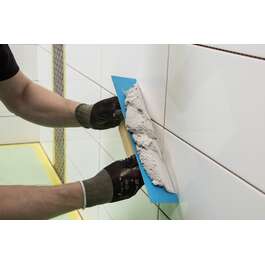
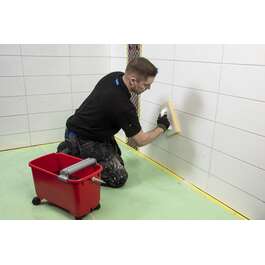
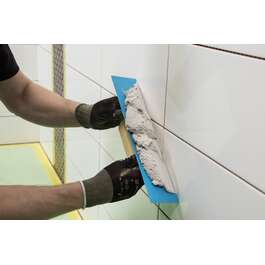
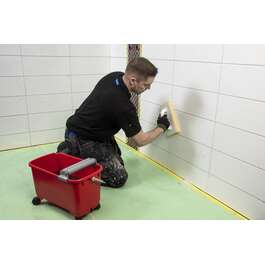
Joint mixtures are formulated products designed to fill, seal, bond, or reinforce the interface between two building elements. They range from cementitious grouts used in masonry joints to flexible sealants and epoxy systems for structural and waterproofing applications. Proper selection and application of a joint mixture ensure durability, structural integrity, and long-term performance of building envelopes, finishes, and mechanical assemblies.

Common Types of Joint Mixtures

Cementitious Mixes

Cement-based joint mixtures (mortar and grout) are used for masonry joints, tile bedding, and repairs. They usually contain Portland cement, sand, and additives for improved workability and reduced shrinkage. Polymer-modified cementitious mixes increase adhesion and flexibility.

Epoxy and Chemical Grouts

Epoxy joint mixtures provide very high strength, chemical resistance, and low permeability. They are favored for structural bonding, crack injection, and heavy-load grout applications. Chemical grouts (acrylics, polyurethanes) are used for sealing leaks and providing waterstops.

Elastomeric Sealants

Silicone, polyurethane, and polysulfide sealants are elastic joint mixtures that accommodate movement, thermal expansion, and vibration. These are commonly used in window perimeters, expansion joints, and façade connections.

Key Composition and Performance Factors

When selecting a joint mixture, consider:

  • Adhesion: Compatibility with substrate materials (concrete, brick, metal, glass).
  • Elasticity and Movement Capability: The percentage of joint movement the material can accommodate without failure.
  • Curing and Pot Life: Time until the material develops functional properties and working time before setting.
  • Durability: Resistance to UV, chemicals, freeze-thaw cycles, and abrasion.
  • Shrinkage and Cracking Potential: Especially important for cementitious mixes.

Application and Installation Best Practices

Surface Preparation

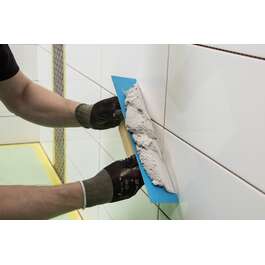
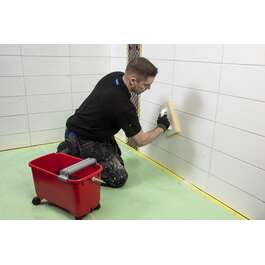
Clean, dry, and sound substrates are essential. Remove dust, loose material, oils, and old sealant. For porous substrates, priming may improve adhesion and reduce outgassing.

Mixing and Placement

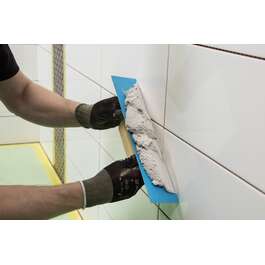
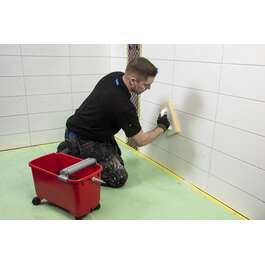
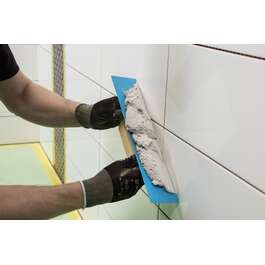
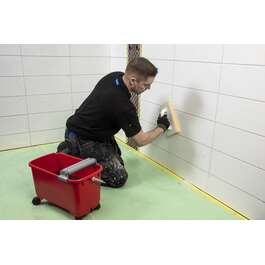
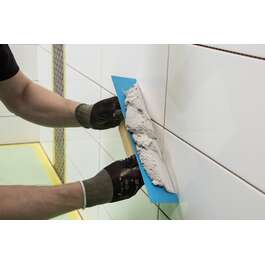
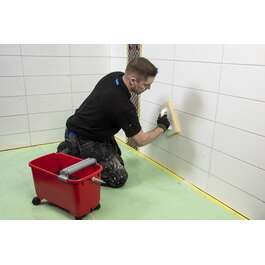
Follow manufacturer mixing ratios, mixing speed, and sequence. Over-watering cementitious mixes reduces strength; under-mixing epoxy can cause soft spots. Place and shape the joint mixture within its workable time.

Curing and Protection

Protect fresh joints from rapid drying, rain, and traffic. Proper curing increases strength and reduces cracking. For cementitious systems, moist curing or curing compounds are often recommended.

Maintenance and Troubleshooting

Inspect joints periodically for cracks, adhesion failure, or chemical attack. Replace aged sealants showing loss of elasticity. For grout or structural failures, diagnose moisture intrusion, movement beyond design limits, or improper initial installation and address the root cause before reapplying a suitable joint mixture.

Selecting the right joint mixture and following correct installation and curing procedures greatly extend service life and reduce lifecycle costs for building joints and connections.

Show more Collapse

Frequently asked questions about the Joint mixtures category

What is the main difference between cement-based and epoxy grout?

Cement-based: Affordable, easy to apply, and porous. Ideal for most dry living areas but requires sealing in wet zones. Epoxy Grout: A two-part resin-based grout that is virtually waterproof and stain-proof. It doesn't require sealing and is perfect for showers, kitchen splashbacks, and heavy-traffic floors.

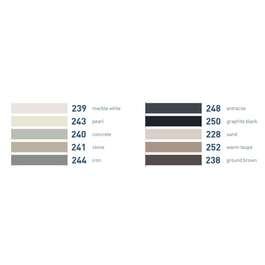
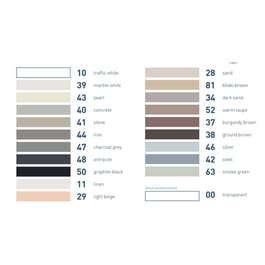
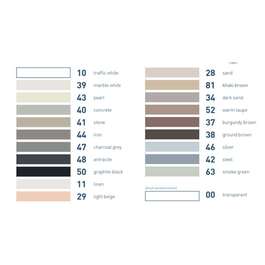
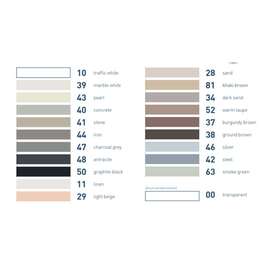
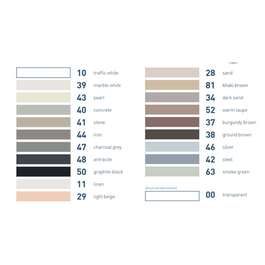
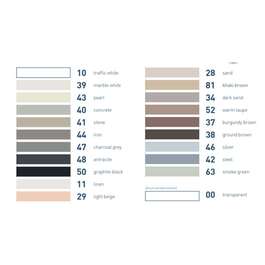
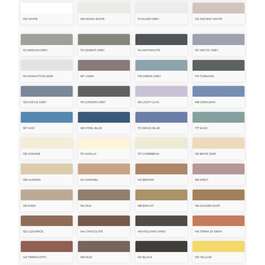
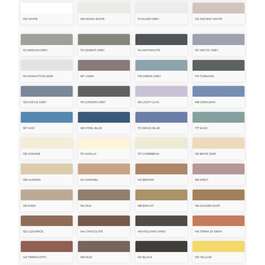
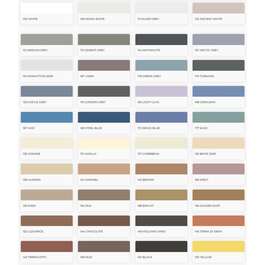
How do I choose the right grout colour?

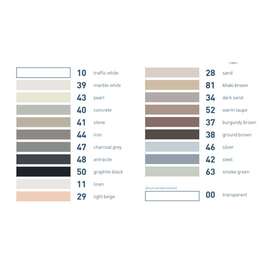
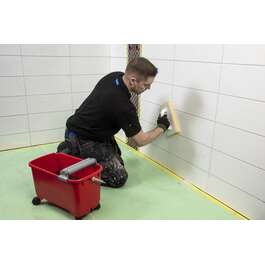
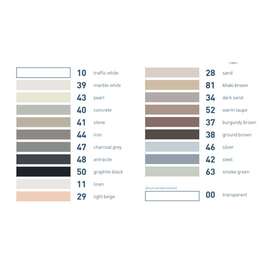
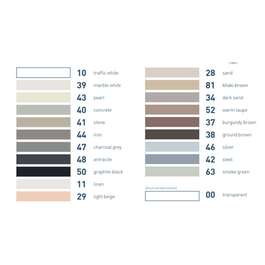
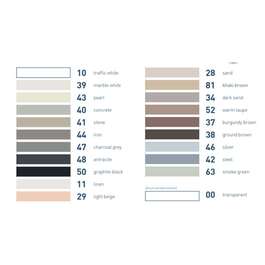
Matching: Creates a seamless look that makes a room feel larger. Contrasting: Highlights the layout and shape of the tiles (e.g., black grout with white subway tiles). Practicality: Mid-to-dark greys are the best for floors as they hide everyday dirt and foot traffic best.

How do I calculate how much grout I need?

The consumption depends on the tile dimensions ($A$ and $B$), thickness ($H$), and the width of the joint ($S$). The general formula for $kg/m^2$ is: $$\text{Consumption} = \frac{A + B}{A \times B} \times H \times S \times 1.6$$ Where 1.6 is the average density coefficient. It’s always safer to use our online calculator on the product page.

Is standard grout suitable for underfloor heating?

Not all. For underfloor heating, you must use a flexible grout (often marked "flex"). These are polymer-modified to handle the thermal expansion and contraction without cracking.

Do I need to seal my grout lines?

If you use cement-based grout in a bathroom or kitchen, yes. Applying a grout protector (sealer) creates a barrier against moisture and mould. Epoxy grout is non-porous and does not require sealing.

How long should I wait after tiling before I start grouting?

You should typically wait 24 to 48 hours to ensure the tile adhesive has fully cured. Grouting too early can trap moisture, leading to discolouration or a weak bond.

What is the ideal grout joint width?

Standard wall tiles: 2–3 mm. Large-format porcelain: 1.5–2 mm. Rustic or quarry tiles: 5–10 mm.

What should I do if my grout has turned black or mouldy?

For cement grout, try a specialized acidic cleaner or a grout refresh pen to restore the colour. If the mould is deep-seated, the old grout may need to be raked out and replaced with a formula containing anti-mould additives.

Can I use grout in the corners instead of silicone?

It is not recommended. Internal corners and joints between walls and floors (or baths) should be filled with sanitary silicone. Silicone is flexible and allows for the minor movement of the building, whereas grout will crack.

Why does my grout look lighter than the sample on the bag?

This usually happens if too much water was used during the mixing or cleaning process, which "washes out" the pigment. Slow drying times or highly porous tile edges can also affect the final shade.

Price of products in the Joint mixtures Category

Joint mixtures: 3.78€ — 48.34€ (133)