


Frequently asked questions about the Work boots category
Work boots — what are they and what tasks are they for?
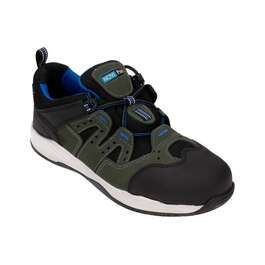
Work boots are protective footwear for construction, manufacturing and warehouse use, safeguarding feet from mechanical injury, chemicals, slipping and cold. Made from durable leather or synthetic materials with reinforced toe caps and anti-slip soles, they suit builders, warehouse staff and outdoor workers.
What are high work boots and when to choose them?
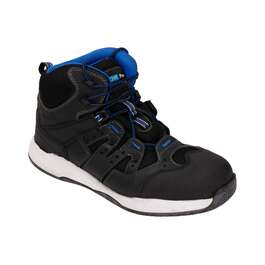
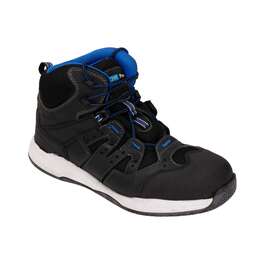
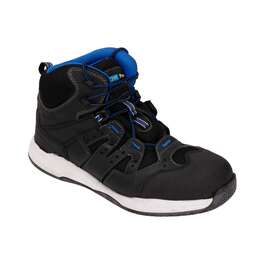
High work boots extend above the ankle to give extra ankle support and protection from water, dirt and sparks. Choose high boots for wet or uneven sites, welding, forestry or when better ankle fixation and protection are needed.
Which work boots with metal toe cap are suitable for construction?
Boots with a metal toe cap use a steel or composite toe to protect against impacts and compression from falling objects. For construction, choose S3-rated models with oil-resistant, puncture-resistant soles and antistatic/ESD features — brands like COFRA and BELLOTA in our range meet these needs.
How do lightweight work boots differ from standard ones?
Lightweight work boots use lighter materials such as microfiber, composite toes and foam PU soles to reduce weight by several hundred grams. They keep protective features (toe cap, anti-slip sole) but are more comfortable for prolonged standing and mobile tasks.
How to choose men's work boots by size and fit?
Measure foot length and width with the socks you’ll wear at work, leaving 0.5–1 cm toe space. Check arch support, sole stiffness and ankle fixation — high boots provide more stability for demanding tasks.
Are there men's winter work boots for cold climates in the range?
The range includes men's winter work boots with insulation and water protection designed for low temperatures and outdoor work. Look for models with fleece or wool lining, thermal insulation and deep-lug soles for grip on ice.
Which work-boot brands are offered (e.g. COFRA, UVEX)?
The category includes brands such as COFRA, BELLOTA, VM, MONITOR and HH, with demand also for UVEX, Caterpillar and Timberland PRO. Brand models vary by protection class (S1, S1P, S3) and features like ESD, SRC and composite toe caps.
What do S1, S1P, S3 markings on safety boots mean?
S1, S1P and S3 indicate protection levels: S1 = basic protection with toe cap and antistatic; S1P = adds puncture resistance; S3 = puncture-resistant, water-resistant and oil-resistant sole. S3 is commonly recommended for construction and outdoor work.
Are work boots suitable for working with electrical components (ESD)?
Yes, the category includes ESD/antistatic work boots that dissipate static charge to protect electronic components. Check product descriptions for ESD or SRC marking to confirm the antistatic sole.
Which men's work boots suit warehouse work and loading?
For warehouse and loading work choose lightweight models with good lateral support, anti-slip soles and reinforced toe — brands like BELLOTA, VM or MONITOR in S1P/S3 ranges. Prefer boots with sole cushioning and agility for long shifts and lifting tasks.
How do UVEX and COFRA boots differ in safety and comfort?
UVEX focuses on lightweight materials and ergonomics, offering breathable, well-cushioned models; COFRA emphasises durability and high protection levels (S3, SRC, ESD) for tough conditions. Choose UVEX for long-wear comfort and COFRA for maximum protection on-site.