


Frequently asked questions about the Oil radiators category
Oil radiators — what are they and how do they work?
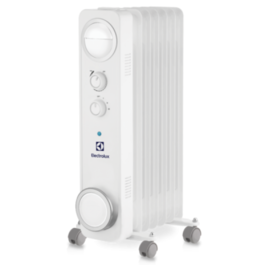
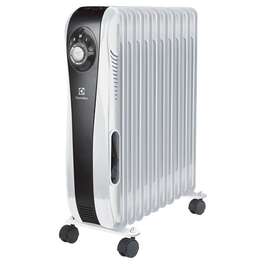
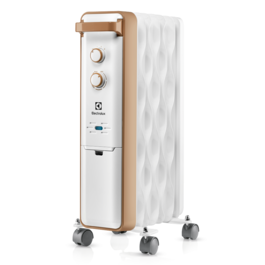
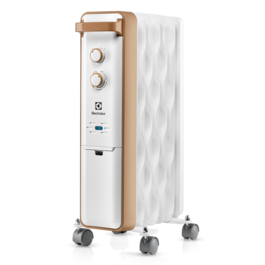
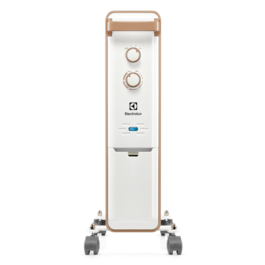
Oil radiators are electric heating units filled with heat-resistant oil and divided into fins (ribs) for heat transfer. An internal heating element warms the oil, which circulates heat evenly across the ribs; the unit continues to radiate heat after being switched off.
Are there models with a fan and why use a fan?
The range includes the GILS 9 RIBI+VENT.2000W+400W model with an integrated fan. The fan speeds up warm-air circulation for faster room heating and is useful when you need rapid or localized heat boost.
How to choose power: 1000W, 1500W, 2000W or 2500W?
Use about 100–150 W per m². 10 m²: 1000–1500W; 15–20 m²: 2000W; larger rooms should use 2500W (for example, the 11-rib 2500W model).
What is the difference between models with 5, 7, 9, 11 ribs?
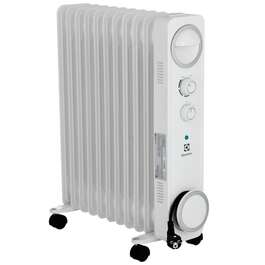
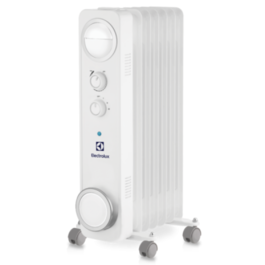
Number of ribs changes heat-transfer surface and thermal inertia: 5 ribs (GILS 5 RIBI 1000W) heat up faster and are compact; 11 ribs (2500W) provide larger surface area and retain heat longer.
Are there wall-mounted oil radiators?
The category includes wall-mountable options — check individual product pages; typically mini models with fewer ribs are designed for wall installation.
Are these radiators suitable for continuous winter use?
Oil radiators such as the ELECTROLUX EOH-series are designed for prolonged operation at steady power; use a thermostat and adjust settings to avoid excessive runtime of the heater.
Which models are recommended for small rooms or an office?
Compact mini models suit small rooms: LEXXA mini 450W 5 RIBI or GILS 5 RIBI 1000W — space-saving, quick to heat and suitable for an office.
How do Electrolux radiators differ within the line?
Electrolux EOH/M models (EOH/M-5209N 2000W, EOH/M-5221N 2200W, EOH/M-6157 7 RIBI) vary by power and number of ribs; Electrolux units typically feature a thermostat and solid build quality.
Can an oil radiator be used in a car?
Our oil radiators are intended for domestic mains power (220–230 V) and are not suitable for direct use in a car without a proper inverter and adaptations.
What extra features should I consider (thermostat, wheels, tip-over protection)?
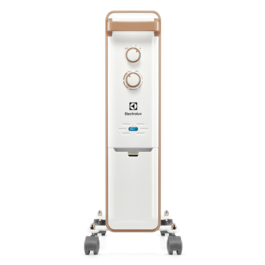
Look for adjustable thermostat for temperature control, wheels for mobility, and automatic tip-over and overheat protection — most modern models in the category include these features.