


In Stock
14.26€ / box
Ex Tax: 11.50€ / box
2.85€ / m²
In Stock
14.26€ / box
Ex Tax: 11.50€ / box
1.78€ / m²
Frequently asked questions about the Floor covers category
Floor covers — what are they and what types exist?
Floor covers are flooring materials including solid wood parquet, laminate, veneer parquet, SPC/LVT vinyl, cork floors and carpets. Types differ by material and properties: parquet offers natural aesthetics and durability, laminate is affordable and imitates wood, SPC/LVT provides water resistance and high wear performance.
Which floor covers are suitable for the kitchen?
For kitchens choose water-resistant, easy-to-clean options like SPC/LVT vinyl and water-resistant laminate (class 33/AC5 or specifically labelled water-resistant). These withstand spills and heavy use, making them practical for kitchen environments.
What is SPC flooring and how does it differ from LVT?
SPC (Stone Plastic Composite) is a rigid, mineral-filled vinyl core, commonly 4–5 mm thick with plank sizes like 179×1220 or 229×1220 mm in the catalogue. SPC is stiffer and more dimensionally stable than flexible LVT, offering higher durability under heavy loads and suitability for underfloor heating.
Which floor covers suit an apartment?
Suitable options for apartments include laminate (8–12 mm, classes 32–33/AC4–AC5), SPC/LVT vinyl for kitchens and wet areas, and solid or veneer parquet for living rooms. Choose by wear class, water resistance and thickness — high-traffic areas call for class 33/AC5.
Can floor covers be installed over water underfloor heating?
Yes — SPC panels and certain laminates labelled compatible with underfloor heating are suitable. Always check the manufacturer’s guidance on maximum surface temperature and underlay thickness before installation.
Which underlay should I choose for laminate and parquet?
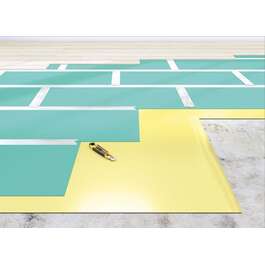
Choose underlay by purpose: 3 mm foam or acoustic underlays level subfloors and reduce sound; SPC/LVT require thinner 1–2 mm underlays for stability. Check moisture barrier properties and load-bearing (kPa) ratings in the product description.
What is the difference between solid wood parquet and veneer parquet?
Solid wood parquet is made from full-thickness timber (e.g. oak), offering deep natural texture and multiple sanding/refinishing cycles. Veneer parquet uses a thin real wood veneer over a substrate — it looks like solid wood but is more economical and allows fewer re-sandings.
What features matter when choosing laminate for an office?
For an office choose laminate with wear class 33/AC5, thickness 8–12 mm, and an anti-static/anti-slip finish. Also consider water resistance and plank format for faster installation and a professional look.
What maintenance products are needed for floor covers?
Use wood-specific cleaning and protective products for parquet and veneer parquet; gentle, non-abrasive cleaners and minimal water for laminate. For SPC/LVT use neutral cleaners and a soft mop; avoid solvents and abrasive agents.