


In Stock
16.10€ / pc.
Ex Tax: 12.98€ / pc.
6.71€ / lm
Type
Wood
Length (mm)
2400
Web (mm)
40
Thickness (mm)
20
Material
Oak


In Stock
15.64€ / pc.
Ex Tax: 12.61€ / pc.
6.52€ / lm
Type
Wood
Length (mm)
2400
Web (mm)
57
Thickness (mm)
13
Material
Oak
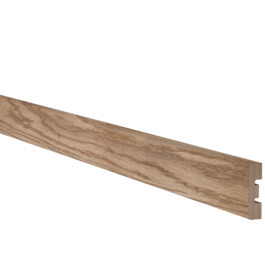

In Stock
16.10€ / pc.
Ex Tax: 12.98€ / pc.
6.71€ / lm
Type
Wood
Length (mm)
2400
Web (mm)
42
Thickness (mm)
12
Material
Oak


In Stock
16.10€ / pc.
Ex Tax: 12.98€ / pc.
6.71€ / lm
Type
Wood
Length (mm)
2400
Web (mm)
70
Thickness (mm)
10
Material
Oak


In Stock
12.42€ / pc.
Ex Tax: 10.02€ / pc.
5.18€ / lm
Type
Wood
Length (mm)
2400
Web (mm)
58
Thickness (mm)
10
Material
Oak


In Stock
31.29€ / pc.
Ex Tax: 25.23€ / pc.
5.21€ / lm
Type
Wood
Length (mm)
6000
Web (mm)
58
Thickness (mm)
10
Material
Oak


In Stock
28.15€ / pc.
Ex Tax: 22.70€ / pc.
4.69€ / lm
Type
Wood
Length (mm)
6000
Web (mm)
70
Thickness (mm)
19
Material
Pine


In Stock
17.03€ / pc.
Ex Tax: 13.73€ / pc.
7.09€ / lm
Type
Wood
Length (mm)
2400
Web (mm)
70
Thickness (mm)
19
Material
Pine


In Stock
7.54€ / pc.
Ex Tax: 6.08€ / pc.
3.14€ / lm
Type
Wood
Length (mm)
2400
Web (mm)
47
Thickness (mm)
19
Material
Pine


In Stock
37.72€ / pc.
Ex Tax: 30.42€ / pc.
6.29€ / lm
Type
Wood
Length (mm)
6000
Web (mm)
90
Thickness (mm)
16
Material
Pine


In Stock
13.99€ / pc.
Ex Tax: 11.28€ / pc.
5.83€ / lm
Type
Wood
Length (mm)
2400
Web (mm)
90
Thickness (mm)
16
Material
Pine


In Stock
25.75€ / set
Ex Tax: 20.77€ / set
4.29€ / lm
Type
Wood
Length (mm)
6000
Web (mm)
70
Thickness (mm)
16
Material
Pine


In Stock
10.12€ / pc.
Ex Tax: 8.16€ / pc.
4.22€ / lm
Type
Wood
Length (mm)
2400
Web (mm)
70
Thickness (mm)
16
Material
Pine


In Stock
17.67€ / pc.
Ex Tax: 14.25€ / pc.
2.95€ / lm
Type
Wood
Length (mm)
6000
Web (mm)
45
Thickness (mm)
16
Material
Pine


In Stock
8.18€ / pc.
Ex Tax: 6.60€ / pc.
3.72€ / lm
Type
Wood
Length (mm)
2200
Web (mm)
70
Thickness (mm)
15
Material
Pine


In Stock
8.18€ / pc.
Ex Tax: 6.60€ / pc.
3.72€ / lm
Type
Wood
Length (mm)
2200
Web (mm)
70
Thickness (mm)
15
Material
Pine


In Stock
17.03€ / set
Ex Tax: 13.73€ / set
2.84€ / lm
Type
Wood
Length (mm)
2400
Web (mm)
47
Thickness (mm)
15
Material
Pine


In Stock
7.18€ / pc.
Ex Tax: 5.79€ / pc.
2.99€ / lm
Type
Wood
Length (mm)
2400
Web (mm)
47
Thickness (mm)
15
Material
Pine


In Stock
17.48€ / pc.
Ex Tax: 14.10€ / pc.
2.91€ / lm
Type
Wood
Length (mm)
6000
Web (mm)
57
Thickness (mm)
13
Material
Pine


In Stock
7.37€ / pc.
Ex Tax: 5.94€ / pc.
3.07€ / lm
Type
Wood
Length (mm)
2400
Web (mm)
57
Thickness (mm)
13
Material
Pine


In Stock
5.98€ / pc.
Ex Tax: 4.82€ / pc.
2.49€ / lm
Type
Wood
Length (mm)
2400
Web (mm)
45
Thickness (mm)
13
Material
Pine


In Stock
19.78€ / pc.
Ex Tax: 15.95€ / pc.
3.30€ / lm
Type
Wood
Length (mm)
2400
Web (mm)
58
Thickness (mm)
12
Material
Pine


In Stock
8.47€ / pc.
Ex Tax: 6.83€ / pc.
3.53€ / lm
Type
Wood
Length (mm)
2400
Web (mm)
58
Thickness (mm)
12
Material
Pine


In Stock
8.47€ / pc.
Ex Tax: 6.83€ / pc.
3.85€ / lm
Type
Wood
Length (mm)
2200
Web (mm)
58
Thickness (mm)
12
Material
Pine


In Stock
15.18€ / pc.
Ex Tax: 12.24€ / pc.
2.53€ / lm
Type
Wood
Length (mm)
6000
Web (mm)
42
Thickness (mm)
12
Material
Pine


In Stock
18.86€ / set
Ex Tax: 15.21€ / set
3.14€ / lm
Type
Wood
Length (mm)
6000
Web (mm)
42
Thickness (mm)
12
Material
Pine


In Stock
6.44€ / pc.
Ex Tax: 5.19€ / pc.
2.68€ / lm
Type
Wood
Length (mm)
2400
Web (mm)
42
Thickness (mm)
12
Material
Pine


In Stock
7.37€ / pc.
Ex Tax: 5.94€ / pc.
3.35€ / lm
Type
Wood
Length (mm)
2200
Web (mm)
42
Thickness (mm)
12
Material
Pine


In Stock
6.62€ / pc.
Ex Tax: 5.34€ / pc.
2.76€ / lm
Type
Wood
Length (mm)
2400
Web (mm)
70
Thickness (mm)
10
Material
Pine


In Stock
14.72€ / pc.
Ex Tax: 11.87€ / pc.
2.45€ / lm
Type
Wood
Length (mm)
6000
Web (mm)
58
Thickness (mm)
10
Material
Pine


In Stock
6.26€ / pc.
Ex Tax: 5.05€ / pc.
2.61€ / lm
Type
Wood
Length (mm)
2400
Web (mm)
58
Thickness (mm)
10
Material
Pine


Pre-Order
Type
Wood
Length (mm)
5600
Web (mm)
45
Thickness (mm)
13
Material
Pine


Out Of Stock
Type
Wood
Length (mm)
6000
Web (mm)
70
Thickness (mm)
10
Material
Pine
Frequently asked questions about the Wooden door architraves category
Wooden door architraves — what is it and what is it used for?
Wooden door architraves are decorative and protective timber moldings that cover the gap between the door frame and the wall, finishing the doorway and protecting edge details. Our range includes solid hardwood and softwood options (oak, pine, etc.) in various profiles and lengths, commonly 2200–6000 mm for trade and DIY use.
What materials are available and how do solid and veneered architraves differ?
We offer solid timber (oak, ash, pine, birch) and veneered architraves. Solid timber gives superior strength and the option to sand and refinish; veneered products provide more dimensional stability and often come primed or pre-finished for painting or staining.
How to choose a profile — flat or profiled architrave?
Choose flat profiles for modern, minimalist interiors and profiled (rounded, stepped) trims for classic looks. Also consider architrave width (common widths 58–70 mm) and wall thickness to ensure the trim covers the frame gap and matches room proportions.
What are the common sizes and available lengths?
Common product dimensions include 10x58x6000 mm, 12x58x2400 mm, and 16x70x2400 mm. Lengths typically range from around 2200/2400 mm up to 6000 mm, suitable for standard doors and bespoke installations.
Are 6000 mm architrave kits suitable for a standard 2100 mm door?
Yes. 6000 mm lengths can be cut into multiple 2200–2400 mm architraves, so one 6000 mm board typically yields pieces for several standard doors. Check the product cross-section and quantity in the item description to confirm yield.
Do I need additional accessories to install architraves?
Yes. Installation commonly requires screws or finishing nails, corner blocks or end caps, and adhesive or sealant for final fixing. The category also offers accessories like caps, adhesives and fixing kits.
Can I paint solid architraves and how to finish oak models?
Yes, solid architraves can be painted or lacquered; oak benefits from a primer followed by a polyurethane or acrylic varnish to protect the grain. Sand and clean the surface before application and follow the coating manufacturer's instructions.
How do prefinished white architraves differ from unfinished ones?
Prefinished white architraves are usually primed or painted and need minimal post-installation work; unfinished architraves require sanding and finishing but allow full control over colour and finish. Choose prefinished for speed, unfinished for custom results.
How to measure architraves for a non-standard wall thickness?
Measure the visible distance from the door frame edge to the face of the wall at several points and use the largest value to ensure coverage. Account for architrave profile depth and fixing allowance; when in doubt choose a wider architrave (eg 70 mm) or a longer board to cut to size.
Which top products are best for restoring old doors?
For restoration choose hardwoods like oak or ash — for example Oak 12x42x2400 mm or Oak 13x57x2400 mm — because they sand and refinish well. Select profiles and widths (42–70 mm) to match the original door style.