


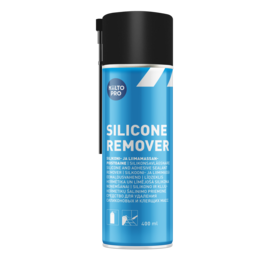
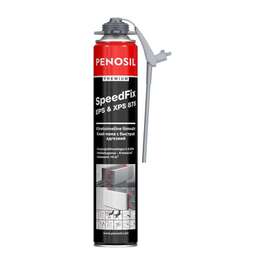
In Stock
13.07€ / pc.
Ex Tax: 10.54€ / pc.
17.43€ / l


In Stock
13.07€ / pc.
Ex Tax: 10.54€ / pc.
17.43€ / l

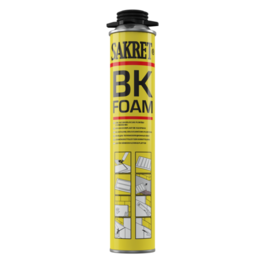


Frequently asked questions about the Building foams, sealants category
What are Building foams, sealants and what tasks are they used for?
Building foams, sealants are materials for sealing, bonding and insulation, including expanding polyurethane foams, silicone and acrylic sealants, and specialised fire or acoustic products. They are used for filling gaps, fixing window and door frames, thermal and sound insulation, and sanitary or structural joints.
What is the difference between one-component and two-component mounting foams?
One-component foams cure by moisture in the air and come in aerosol or gun packs, suitable for general and DIY use. Two-component foams are mixed before use and provide higher strength and dimensional stability for structural joints.
Which sealant is best for windows and doors: silicone, acrylic or polyurethane?
For movement joints in windows and doors use an elastic silicone or polyurethane sealant (e.g. SIKAFLEX 291i) because they accommodate deformation. Acrylics are suitable for painted surfaces but are less elastic.
Which foam is suitable for window installation in winter?
Choose winter-grade or 'allseason' mounting foams (e.g. SIKA BOOM 750ml ALLSEASON GUN) that retain expansion and curing properties at lower temperatures within the limits stated on the can.
Should I use sanitary silicone or a universal sealant for bathrooms and kitchens?
Use sanitary silicone (e.g. MOMENT SANITARY) in wet rooms because it contains anti-mould additives and resists moisture. Universal silicones may be fine elsewhere but often lack dedicated mould protection.
How to choose a sealant by colour and paintability?
Acrylic sealants are paintable after curing and come in white or neutral tones. Silicones are typically not paintable, so select the correct colour or use an acrylic if you need to paint the joint later.
What accessories do I need to work with mounting foam and sealants?
You need a foam gun and cartridge gun, nozzles and applicators for precise application, foam remover for fresh residues, and protective gloves. Aerosol foams use special nozzles while gun foams require a foam gun.
How to prepare a surface before applying a sealant?
The surface must be clean, dry and degreased: remove dust and old sealant and use a silicone remover (e.g. KIILTO PRO) if needed. Prime uneven or porous substrates with a suitable primer before sealing.
Which sealants are suitable for outdoor work and weather-resistant?
For exterior joints choose frost- and UV-resistant silicone or polyurethane sealants (e.g. SIKAFLEX) and 'allseason' foams. Proper application ensures durability against temperature changes and moisture.
Which sealant to choose for concrete and stone — acrylic or polyurethane?
Polyurethane sealants and mounting foams with good adhesion to porous substrates (e.g. BOSTIK PU-MASS) are preferable for concrete and stone. Acrylics are suitable for small cracks and paintable joints but are less durable.