





In Stock
12.00€ / box
Ex Tax: 9.68€ / box
0.40€ / pc.
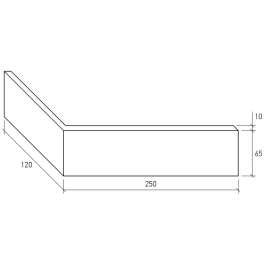
Thickness (сm)
1
Quantity (pcs)
30
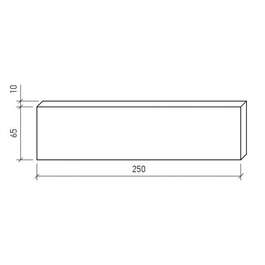
Length (cm)
25
Width (cm)
6.5
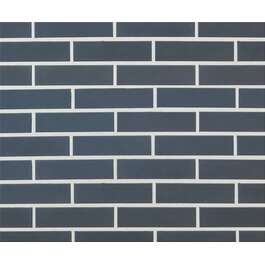
Color/Texture
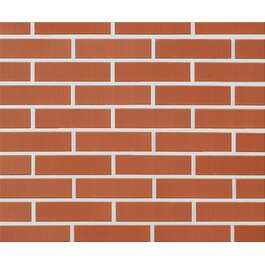
Plaat herkules


Out Of Stock
Thickness (сm)
1
Quantity (pcs)
30
Length (cm)
25
Width (cm)
6.5
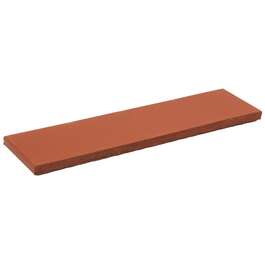
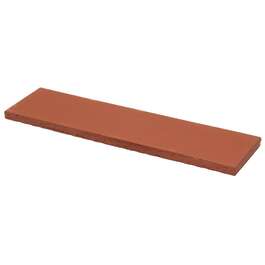
Color/Texture
Plaat libra
Frequently asked questions about the Ceramic tiles category
What is the difference between ceramic tile and porcelain tile?
Ceramic tile is made from clay with a glazed surface — it is lighter, less expensive and easier to cut, but less durable and less moisture-resistant. Porcelain tile is fired at higher temperatures, has water absorption below 0.5% and is resistant to frost and mechanical loads. Both are suitable for residential floors; for outdoor use, commercial floors and wet areas, porcelain tile is preferred.
How to choose floor tile: what is the PEI rating?
PEI (Porcelain Enamel Institute) is a 5-class classification of floor tile glaze wear resistance. PEI I–II: walls or very low-traffic floors (bedroom). PEI III: residential rooms with moderate foot traffic (living room, kitchen). PEI IV: high traffic (hallway, shop). PEI V: extreme loads (shopping centres, airports). For wall tiles, the PEI rating is irrelevant — only the glaze quality matters there.
Can wall tiles be laid on the floor?
No — wall tile is not designed for walking loads: it has a low PEI class (I–II), the glaze wears quickly and the body is more brittle than floor tile. Only tiles marked PEI III or higher, or bearing a "foot" icon, should be used on floors. The reverse — laying floor tiles on walls — is permissible provided the adhesive offers sufficient bond strength to support the tile weight.
Which tile adhesive to choose — C1, C2, what do the letters mean?
Designations per EN 12004: C — cementitious adhesive, D — dispersion adhesive, R — reactive (epoxy) adhesive. Number: 1 — standard, 2 — improved (higher adhesion). Letters: T — thixotropic (no slip on walls), E — extended open time, S1/S2 — deformable/highly deformable. For most work in dry rooms: C1. For wet areas, large-format tiles and underfloor heating: C2 T E S1.
How to calculate the quantity of tiles including waste?
Basic calculation: room area (m²) plus a percentage for cuts and breakage. For straight-lay installation — 5–7% extra. For diagonal installation — 10–15%. For rooms with many cut-outs — up to 15–20%. It is also recommended to add 5% for future use to replace any damaged tiles from the same batch. It is best not to change the batch (lot) during a project: colour and shade can differ slightly between batches.
What is rectified tile and why is it used?
Rectified tile is precision-cut after firing to a high tolerance (±0.3 mm), unlike standard pressed tile (±0.5–1 mm tolerance). This allows installation with a minimum joint of 1 mm and a perfectly flat surface. The downside: it requires a flatter substrate and more careful laying. It is used in designer interiors, minimal-joint installations and large open spaces.
Which grout to choose — cementitious or epoxy?
Cementitious grout (Keracolor, Ceresit CE 33 etc.) — accessible, easy to apply, suitable for 2–20 mm joints, wide colour range. Downside: absorbs moisture and stains without a sealant. Epoxy grout — chemically resistant, non-absorbent, ideal for kitchen splashbacks, pools and commercial areas. Downside: more expensive, requires experience to apply. For residential rooms — cementitious with sealant; for permanently wet areas — epoxy.
What minimum joint width is recommended for tile installation?
Minimum recommended joint: 1.5–2 mm for rectified tile, 2–3 mm for standard tile. Butt-jointing (zero grout line) is only acceptable for precision rectified formats in dry rooms, but creates a risk of debonding due to thermal expansion. Maximum joint for floor tile — 10 mm, for wall tile — 5 mm with standard cementitious grout.
Can tile be laid on underfloor heating?
Yes — ceramic and porcelain tile conduct heat well and do not deform under heating. Requirements: C2 S1 class adhesive (deformable); expansion joints along the room perimeter and across the area at least every 6–8 m²; do not activate heating until the adhesive has fully cured — at least 28 days for hydronic systems and 7 days for electric. Heating too quickly in the first days is the main cause of tile debonding from underfloor heating.
How to choose tile for a bathroom — what to consider?
Key parameters: water absorption (for walls — up to 10%, for floors — up to 3%); slip resistance — class R9 or higher per DIN 51130 (R10 for walk-in showers); chemical resistance to household cleaners — glazed surfaces require no special treatment; size — in a small bathroom, large-format tiles visually enlarge the space. For shower floors, mosaic or tiles no larger than 30×30 mm with anti-slip texture are recommended.
What is wood-effect and stone-effect tile — is it worth it compared to natural materials?
Modern wood-effect and stone-effect tile is produced using digital printing and is visually almost indistinguishable from the real thing. Advantages over natural materials: no maintenance required, does not rot, resistant to moisture and temperature fluctuations, hygienic. Disadvantage — the absence of the tactile warmth of real wood and the natural texture of stone. For bathrooms, kitchens and terraces — an excellent choice in terms of price, durability and appearance.
Can new tiles be laid over existing tiles?
Yes, under certain conditions: the existing tiles must be fully and firmly bonded (checked by tapping — no hollow sounds), the surface must be degreased and primed, and the height difference must be minimal. A C2 high-adhesion adhesive is used. Limitations: floor loading increases; door clearances may become too low. Not recommended if more than one layer of existing tile is already present.
How should tile be stored before installation?
Tiles are stored flat on pallets in an enclosed space at a temperature of at least +5°C. Boxes must not be stored on their edges — tiles can crack. Adhesive and grout are stored in a dry place at +5 to +25°C. Before installation, tiles from different boxes of the same batch are interleaved to avoid visible shade variation. Adhesive is applied when the substrate and air temperature are between +5 and +30°C.
What tile subcategories are available at Sitypro.com?
The "Ceramic Tile" section at Sitypro.com includes: ceramic tile and natural stone (floor tiles and décor, wall tiles and décor, mosaic and borders), clinker tile, pool tile, as well as tile grout and adhesives. The range covers both budget solutions and designer collections from leading European manufacturers, with delivery throughout Estonia.
How to order tile from Sitypro.com — delivery and terms?
The full range of ceramic tiles, adhesives, grout and accessories is available at sitypro.com in the "Ceramic Tile" section. Delivery throughout Estonia. When ordering, it is recommended to specify the batch (lot) number — this ensures colour consistency. For tile selection advice, quantity calculation and stock enquiries: +372 536 16980. Our team will help you choose the right tile, adhesive and grout for your project and budget.